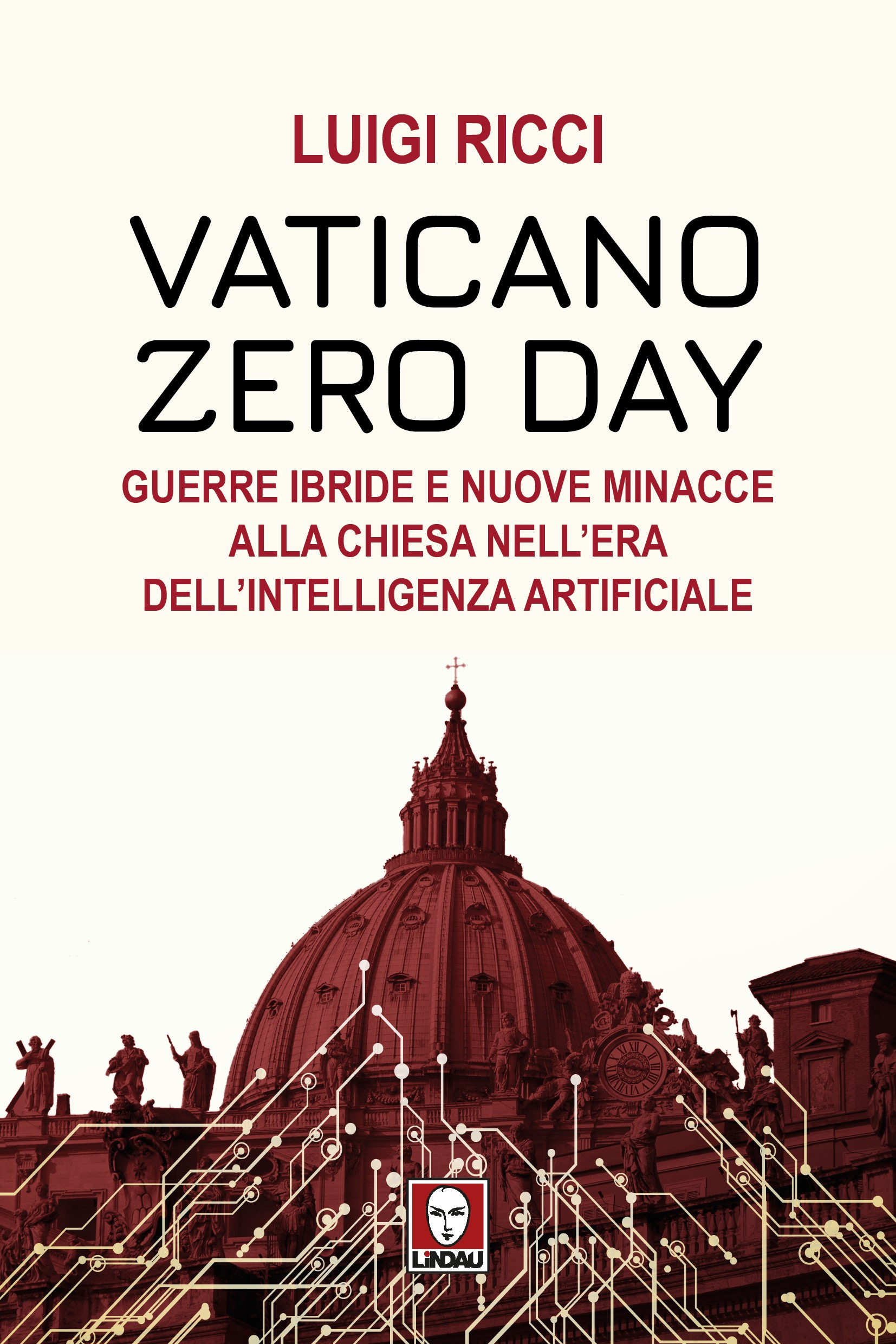
Vaticano Zero Day: La guerra che guardie svizzere e gendarmi vaticani non possono fermare
Il Vaticano è il bersaglio perfetto di una guerra invisibile che non usa i carri armati, ma gli algoritmi. Ecco perché riguarda anche te.
Di Luigi Ricci - 20 marzo 2026
Esiste una vulnerabilità che nessuna uniforme può proteggere. Mentre il mondo guarda ai conflitti fisici, un’altra guerra sta infiltrando silenziosamente i server di Piazza San Pietro: il Vaticano, antico attore diplomatico che custodisce duemila anni di memoria su fibra ottica, si muove con l’inerzia dei secoli, la minaccia digitale si muove con l’accelerazione dei millisecondi. Quando queste due curve si incrociano, nasce un vuoto. E nei vuoti entrano i nemici.
In questa intervista esclusiva esploriamo tre fronti di una stessa crisi: chi protegge la Santa Sede nel silenzio, cosa succede quando deleghiamo l’etica a una scatola nera, e perché un attacco informatico al Vaticano può destabilizzare la geopolitica mondiale.
“L’antico non sempre riconosce il nuovo nemico finché non è già dentro.”
A cura della Redazione
La Chiesa sotto attacco. Non con le armi, ma con gli algoritmi.
Esiste una guerra che non si combatte sui campi di battaglia, non lascia macerie visibili e non produce morti di cui si possa dare notizia. Tuttavia, colpisce con precisione chirurgica ciò che una civiltà ha di più fragile: la fiducia nelle proprie istituzioni, la coerenza della propria memoria, la credibilità di chi parla in suo nome.
Il Vaticano, potenza morale globale, archivio di duemila anni di storia, attore diplomatico silenzioso in decine di conflitti attivi, è diventato uno dei bersagli più sofisticati di questa guerra invisibile. Non perché sia debole. Ma perché è antico, e l’antico non sempre riconosce il nuovo nemico finché non è già dentro.
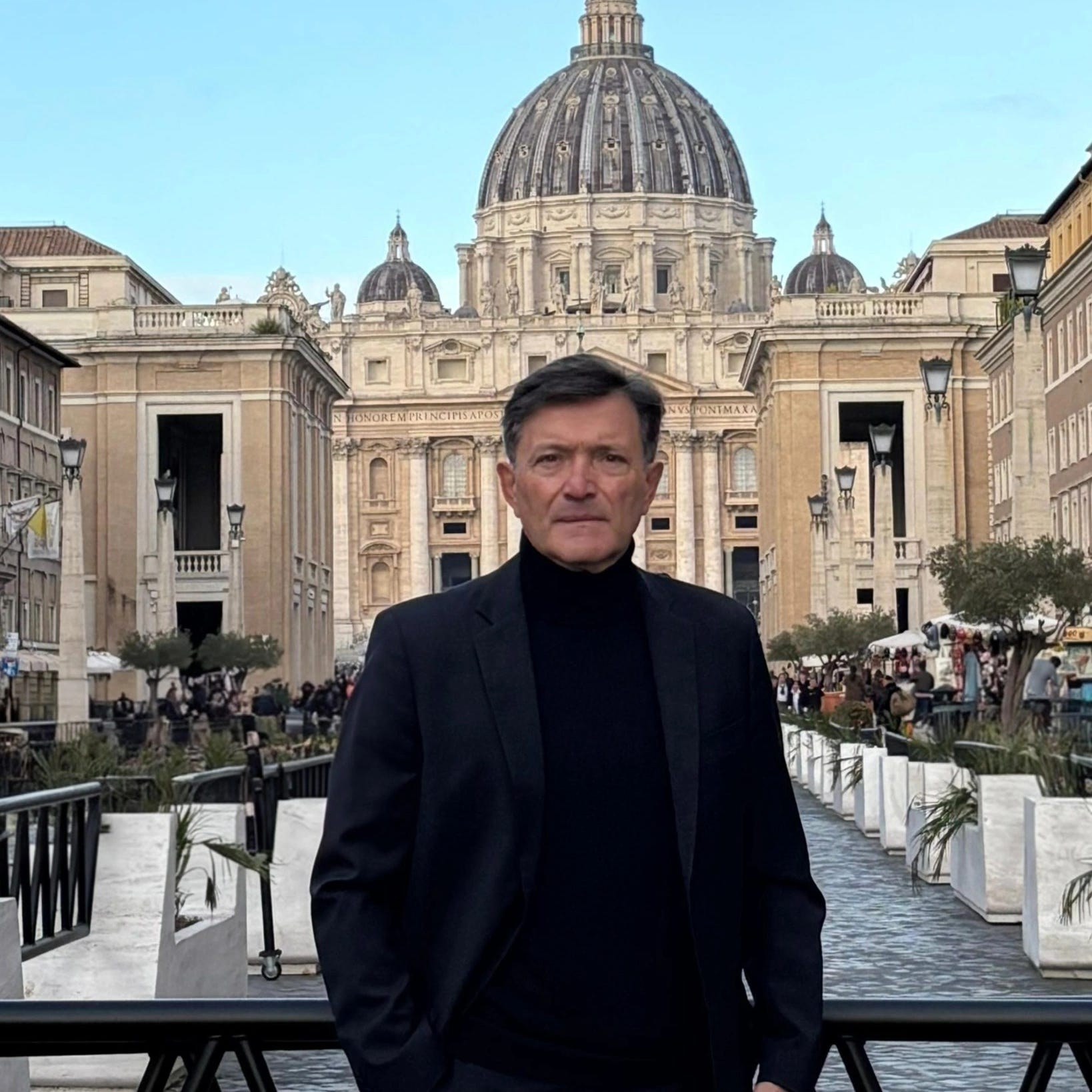
Luigi Ricci, analista di sistemi complessi e diretto re dell’Istituto Barometro, ha trascorso anni a mappare le vulnerabilità digitali, le campagne di disinformazione e le derive algoritmiche che convergono sulla Santa Sede. Il risultato è Vaticano Zero Day (Lindau, 1° maggio 2026): un’analisi sistemica che usa il lessico dell’intelligence per leggere una crisi che riguarda tutti, credenti e non.
Una precisazione che Ricci tiene a fare prima di cominciare: “Ho avuto una formazione cattolica, poi l’ho persa. Per anni ho guardato alla Chiesa da analista laico, come a un’istituzione complessa ma esterna. Questo libro però mi ha rimesso in viaggio, non durante la scrittura, durante la ricerca. Quando studi la vulnerabilità della Chiesa agli attacchi ibridi, quando leggi i documenti, quando ti confronti con la realtà dei cristiani perseguitati, non puoi restare completamente neutrale. Non posso dire di essere arrivato alla fede, ma non posso più dire di esserne semplicemente distante.”
È da questo punto, un analista che entra nel materiale come tecnico e ne esce scosso, che ha senso cominciare.
Il campo di battaglia invisibile
Dottor Ricci, nel suo saggio parla di “Guerre Ibride” contro la Chiesa. Il Vaticano non ha un esercito tradizionale, come può essere un bersaglio militare?
“Oggi il campo di battaglia non è più solo fisico. Le guerre ibride colpiscono la reputazione e il consenso. La Chiesa, essendo una potenza morale globale, viene attaccata attraverso campagne di disinformazione coordinate e infiltrazioni digitali mirate a destabilizzare la sua unità. Il ‘nemico’ non usa i carri armati, ma algoritmi e bot per manipolare la percezione dei fedeli e dell’opinione pubblica.”
Ricci non lascia il concetto nell’astratto. La guerra ibrida, spiega, non ha bisogno di vincere, ha bisogno solo di creare sufficiente caos perché l’istituzione bersaglio smetta di essere credibile agli occhi di chi dovrebbe ascoltarla. Per una struttura che fonda la propria autorità sulla parola, sulla continuità e sulla fiducia, è una minaccia esistenziale. È silenziosa quasi per definizione.
“C’è una cosa che mi ha colpito durante la ricerca e che nel libro ho potuto solo accennare,” aggiunge. “Il momento in cui certi pattern si ripetono con una coerenza che non puoi più attribuire al caso. Ma questo è un terreno che il lettore deve percorrere da solo.”
La breccia sconosciuta
Il titolo del libro cita lo “Zero Day”. Perché questa terminologia informatica è così centrale per il futuro della Santa Sede?
“In informatica, uno ‘Zero Day’ è una falla sconosciuta che permette un accesso totale prima che qualcuno possa porvi rimedio. Uso questo termine come metafora della fragilità attuale: il Vaticano possiede archivi millenari e segreti diplomatici che oggi viaggiano su fibra ottica. Uno ‘Zero Day’ digitale in Vaticano non compromette solo un server, ma può esporre secoli di storia o minare la sicurezza dei cristiani in zone di conflitto dove la diplomazia pontificia opera nel silenzio.”
Secoli di storia su fibra ottica. È questa l’immagine che rimane.
Ma c’è un dettaglio che Ricci cita quasi di passaggio, e che vale la pena fermarsi a leggere: mentre il libro era ancora in fase di ricerca, ha iniziato a osservare la nascita spontanea di un gruppo di esperti di cybersicurezza, tecnici, pentester, ingegneri di rete, che hanno cominciato a organizzarsi informalmente per proteggere la Santa Sede. Senza mandato istituzionale, senza stipendio, senza riconoscimento ufficiale. Una confraternita digitale che si è scelta Carlo Acutis come patrono e produce threat intelligence su base volontaria. È visibile su LinkedIn. Esiste adesso.
“Non l’ho previsto,” dice Ricci. “C’era un vuoto, e i vuoti nella storia della Chiesa vengono sempre riempiti. Prima dagli ordini mendicanti, poi dagli ordini ospedalieri. Oggi da programmatori e analisti di sicurezza.”
L’anima dell’algoritmo
Papa Leone XIV parla spesso di etica tecnologica. Qual è la sfida più grande che l’intelligenza artificiale pone alla dottrina della Chiesa?
“La sfida è antropologica. L’AI può simulare il discernimento, ma non possiede l’anima né la carità. Nel saggio analizzo il rischio di una ‘fede algoritmica’, dove le decisioni etiche vengono delegate a macchine ‘scatola nera’. La Chiesa può guidare lo sviluppo dell’AI, l’algoretica, per evitare che la tecnologia diventi un nuovo idolo che emargina l’essere umano, trasformando i fedeli in semplici dati da processare.”
“Fede algoritmica.” Il termine è di quelli che non si dimenticano facilmente. Descrive qualcosa di preciso: il momento in cui smettiamo di chiederci perché una decisione è giusta e accettiamo che lo sia perché un sistema ce lo dice. È la fine del discernimento come pratica umana.
Ed è, forse, la minaccia più difficile da contrastare, perché non arriva come un attacco. Arriva come una comodità.
Alla fine di questa conversazione, cosa rimane?
Un’analisi che non si presenta come profezia, ma che ha la fastidiosa abitudine di anticipare la realtà. Una vulnerabilità cyber documentata. Un’Autorità Cibernetica Vaticana che ancora non esiste. Una confraternita digitale che invece esiste già, nata esattamente nel vuoto che il libro aveva identificato.
E un analista laico che è entrato nel materiale come tecnico, e ne è uscito in viaggio verso qualcosa che ancora non sa nominare.
Questo non è profetico.
È chirurgico.
Vaticano Zero Day di Luigi Ricci è pubblicato da Lindau. Disponibile dal 1° maggio 2026, in preordine ora.
Se questo articolo ti ha colpito, condividilo con chi si occupa di geopolitica, sicurezza digitale o dottrina sociale. Il libro parla a tutti, credenti e non.
English Version
Vatican Zero Day: The War That Swiss Guards and Vatican Gendarmes Cannot Stop
The Vatican is the perfect target of an invisible war fought not with tanks, but with algorithms. Here’s why it concerns you too.
There is a vulnerability no uniform can protect. While the world watches physical conflicts unfold, another war is silently infiltrating the servers beneath St. Peter’s Square: the Vatican, an ancient diplomatic actor safeguarding two thousand years of memory on fiber optic cables, moves with the inertia of centuries, the digital threat moves with the acceleration of milliseconds. When these two curves intersect, a void is created. And in voids, enemies enter.
In this exclusive interview we explore three fronts of the same crisis: who protects the Holy See in digital silence, what happens when we delegate ethical judgment to a black box, and why a cyberattack on the Vatican could destabilize global geopolitics.
“The ancient does not always recognize the new enemy until it is already inside.”
Editorial team, Studio Barometro
The Church under attack. Not with weapons, but with algorithms.
There is a war that is not fought on battlefields, leaves no visible rubble, and produces no casualties that can be reported. Yet it strikes with surgical precision at what a civilization holds most fragile: trust in its own institutions, the coherence of its memory, the credibility of those who speak in its name.
The Vatican, global moral power, archive of two thousand years of history, silent diplomatic actor in dozens of active conflicts, has become one of the most sophisticated targets of this invisible war. Not because it is weak. But because it is ancient, and the ancient does not always recognize the new enemy until it is already inside.
Luigi Ricci, complex systems analyst and director of Studio Barometro, has spent years mapping the digital vulnerabilities, disinformation campaigns, and algorithmic drift converging on the Holy See. The result is Vatican Zero Day (Lindau, May 1, 2026): a systemic analysis that uses the lexicon of intelligence to read a crisis that concerns everyone, believers and non-believers alike.
There is something Ricci insists on saying before we begin: “I had a Catholic upbringing, then I lost it. For years I looked at the Church as a secular analyst, as a complex institution, but an external one. This book, however, set me back on a journey. Not during the writing, during the research. When you study the Church’s vulnerability to hybrid attacks, when you read the documents, when you confront the reality of persecuted Christians, you cannot remain completely neutral. I cannot say I have arrived at faith, but I can no longer say I am simply distant from it.”
It is from this point, an analyst who enters the material as a technician and emerges shaken, that it makes sense to begin.
The invisible battlefield
Dr. Ricci, in your essay you speak of “Hybrid Wars” against the Church. The Vatican has no traditional army, how can it be a military target?
“Today the battlefield is no longer purely physical. Hybrid wars strike at reputation and consensus. The Church, as a global moral power, is attacked through coordinated disinformation campaigns and targeted digital infiltrations aimed at destabilizing its unity. The ‘enemy’ does not use tanks, but algorithms and bots to manipulate the perception of the faithful and public opinion.”
Ricci does not leave the concept in the abstract. Hybrid warfare, he explains, does not need to win, it only needs to create enough chaos for the target institution to lose credibility in the eyes of those who should be listening to it. For a structure that grounds its authority in the word, in continuity, and in trust, it is an existential threat. And a silent one, almost by definition.
“There is something that struck me during the research, something I could only hint at in the book,” he adds. “The moment when certain patterns repeat with a coherence you can no longer attribute to chance. But that is territory the reader must walk alone.”
The unknown breach
The book’s title references the “Zero Day.” Why is this term from computer science so central to the Vatican’s future?
“In computing, a ‘Zero Day’ is an unknown vulnerability that allows total access before anyone can remedy it. I use this term as a metaphor for the current fragility: the Vatican holds millennia-old archives and diplomatic secrets that today travel on fiber optic cables. A digital Zero Day in the Vatican does not just compromise a server, it can expose centuries of history or undermine the safety of Christians in conflict zones where papal diplomacy operates in silence.”
Centuries of history on fiber optic cables. That is the image that stays with you.
But there is a detail Ricci mentions almost in passing, one worth pausing to read carefully: while the book was still in research, he began observing the spontaneous emergence of a group of cybersecurity experts, technicians, penetration testers, network engineers, who started organizing informally to protect the Holy See. Without institutional mandate, without salary, without official recognition. A digital confraternity that chose Carlo Acutis as its patron and produces threat intelligence on a voluntary basis. It is visible on LinkedIn. It exists right now.
“I did not predict it,” says Ricci. “I deduced it. There was a void, and voids in the history of the Church are always filled. First by mendicant orders, then by hospital orders. Today by programmers and security analysts.”
The soul of the algorithm
Pope Leo XIV frequently speaks of technological ethics. What is the greatest challenge that artificial intelligence poses to Church doctrine?
“The challenge is anthropological. AI can simulate discernment, but it possesses neither soul nor charity. In the essay I analyze the risk of an ‘algorithmic faith,’ where ethical decisions are delegated to black-box machines. The Church must guide the development of AI, what I call algorethics, to prevent technology from becoming a new idol that marginalizes the human being, transforming the faithful into mere data to be processed.”
“Algorithmic faith.” The term is not easily forgotten. It describes something precise: the moment we stop asking why a decision is right and accept that it is right because a system tells us so. It is the end of discernment as a human practice.
And it is, perhaps, the most difficult threat to counter, because it does not arrive as an attack. It arrives as a convenience.
What remains at the end of this conversation?
An analysis that does not present itself as prophecy, but that has the unsettling habit of anticipating reality. A documented cyber vulnerability. A Vatican Cyber Authority that does not yet exist. A digital confraternity that already does, born precisely in the void the book had identified.
And a secular analyst who entered the material as a technician, and emerged traveling toward something he cannot yet name.
This is not prophetic.
It is surgical.
Vatican Zero Day by Luigi Ricci is published by Lindau. Available from May 1, 2026, on pre-order now.
If this article resonated with you, share it with anyone working in geopolitics, digital security, or social doctrine. The book speaks to everyone, believers and non-believers alike.


Commenti
Posta un commento